Why the lines build up deposits
In SNCR systems urea reaches the lances dissolved in water. As long as it flows, it stays in solution. When it stands still in the piping, cools down or the water evaporates, urea turns solid again and settles on the walls, together with the impurities in the water.
This happens mainly in three situations:
- when dosing stops and the solution is left standing in the piping and lances;
- in the lances inside the boiler, where heat evaporates the remaining water and leaves urea on the nozzles;
- in cold weather: the 32.5% solution starts to crystallise at around −11 °C, the 40% solution already at around 0 °C, according to the producer Yara.
The water used to dilute urea matters too: hard water leaves scale that can plug the nozzles and stop the system.
What happens without flushing
Deposits build up layer after layer and narrow the passage. The effects show in the plant’s results even before they show on the components:
- less urea reaches the lances and stack NOx rises;
- partly blocked nozzles distort the spray: part of the cross-section gets no reagent, another part gets too much and ammonia slip increases;
- automatic dosing compensates by raising the flow, so urea consumption grows;
- in the worst cases the lines close up and shutdowns are needed to remove and clean or replace them.
A real case
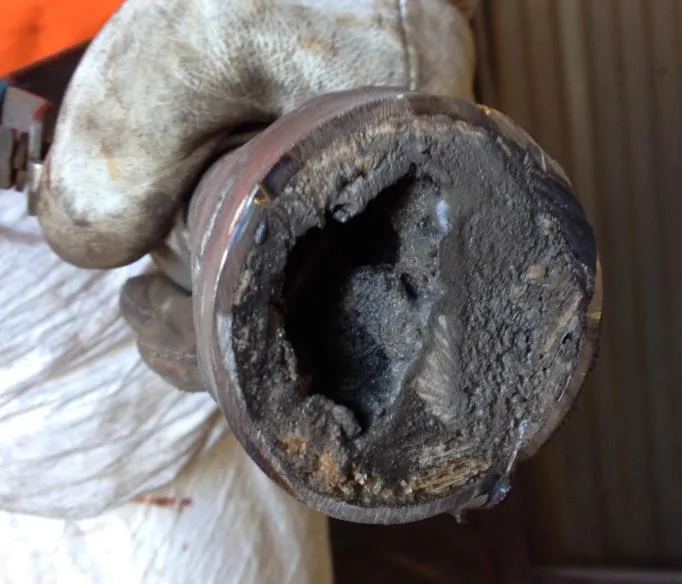
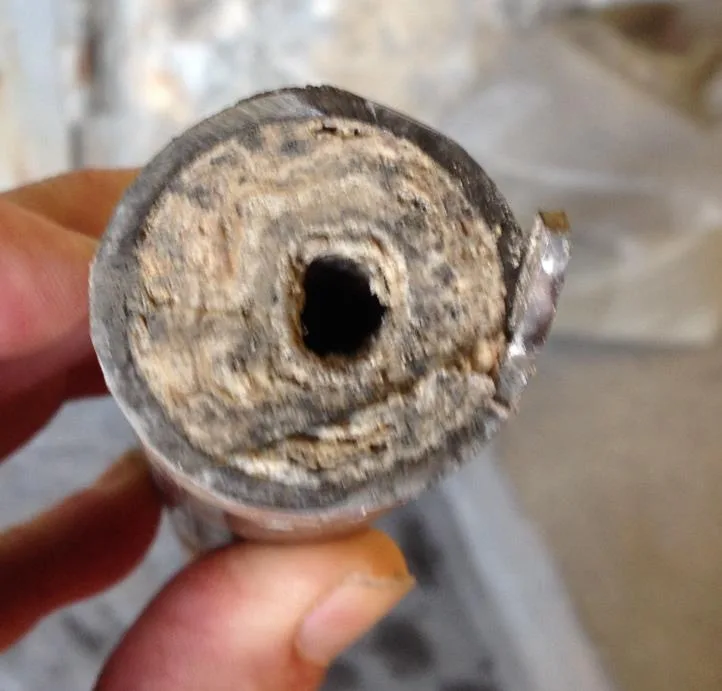
On an SNCR system that had been running for over ten years, during a revamping we found the urea piping so heavily scaled that the flow to the lances was reduced. The photos show two sections that were removed: deposits had closed most of the passage.
We replaced the whole network with new stainless steel piping, overhauled the lances with new nozzles and adjusted urea dilution in demineralised water. The plant went back to meeting its NOx and ammonia slip limits with moderate urea dosing.
When to flush
- Every time dosing stops: water is passed through the piping and lances to push out the remaining urea, then they are drained. This is the most important flush, because it prevents the solution from standing still.
- Periodically, during operation: a water rinse dissolves early deposits in the nozzles before they harden.
- Before cold periods or long shutdowns: the lines must be flushed and fully drained, because remaining water or solution can freeze and block restart.
What to flush with
Flushing and urea dilution need demineralised water: with untreated mains water, limescale adds to the urea deposits and makes the problem worse instead of solving it.
Manual or automatic
A dedicated flushing system can be built into the plant, with valves and flushing water connections already in place. Manual or automatic depends on the plant:
- Manual: on simple plants, where the customer wants to keep costs down, the operator opens and closes the flushing valves by hand following a procedure.
- Automatic: on plants running 24/7, or where the DeNOx system cannot stop, the valves are automatic. Flushing is started from the control panel and the sequence runs on its own, with no work on the valves.
Either way, flushing is part of routine operation, as explained in our guide SNCR system: how it works and what it is made of.
Frequently asked questions
Why do the pipes of an SNCR system build up deposits?
Because urea, when the solution stands still, cools down or the water evaporates, turns solid again and settles on the walls together with the impurities in the water.
How often should the lines be flushed?
At every dosing stop, with periodic rinses during operation and a full flush and drain before long shutdowns or cold weather.
What water is used for flushing?
Demineralised water, the same used to dilute urea. Hard water adds limescale to the deposits.
Can flushing be automatic?
Yes. On plants running 24/7 the valves are automatic and flushing is started from the control panel; on simpler plants the valves are operated by hand.