Nitrogen oxides (NOx)
NOx refers to nitric oxide (NO) and nitrogen dioxide (NO₂) produced in combustion processes; in flue gas NO typically accounts for about 95% of the total. Emissions are expressed as NO₂, in mg/Nm³ on dry gas, referred to the O₂ content set by the permit.
There are two formation mechanisms:
- Thermal NOx: oxidation of nitrogen in the combustion air at high flame temperatures;
- Fuel NOx: oxidation of nitrogen contained in the fuel, dominant with biomass and waste.
When primary measures (secondary air, flue gas recirculation, combustion control) are not enough to meet the limit, a secondary abatement system is needed: SNCR or SCR.
SNCR – Selective non-catalytic reduction
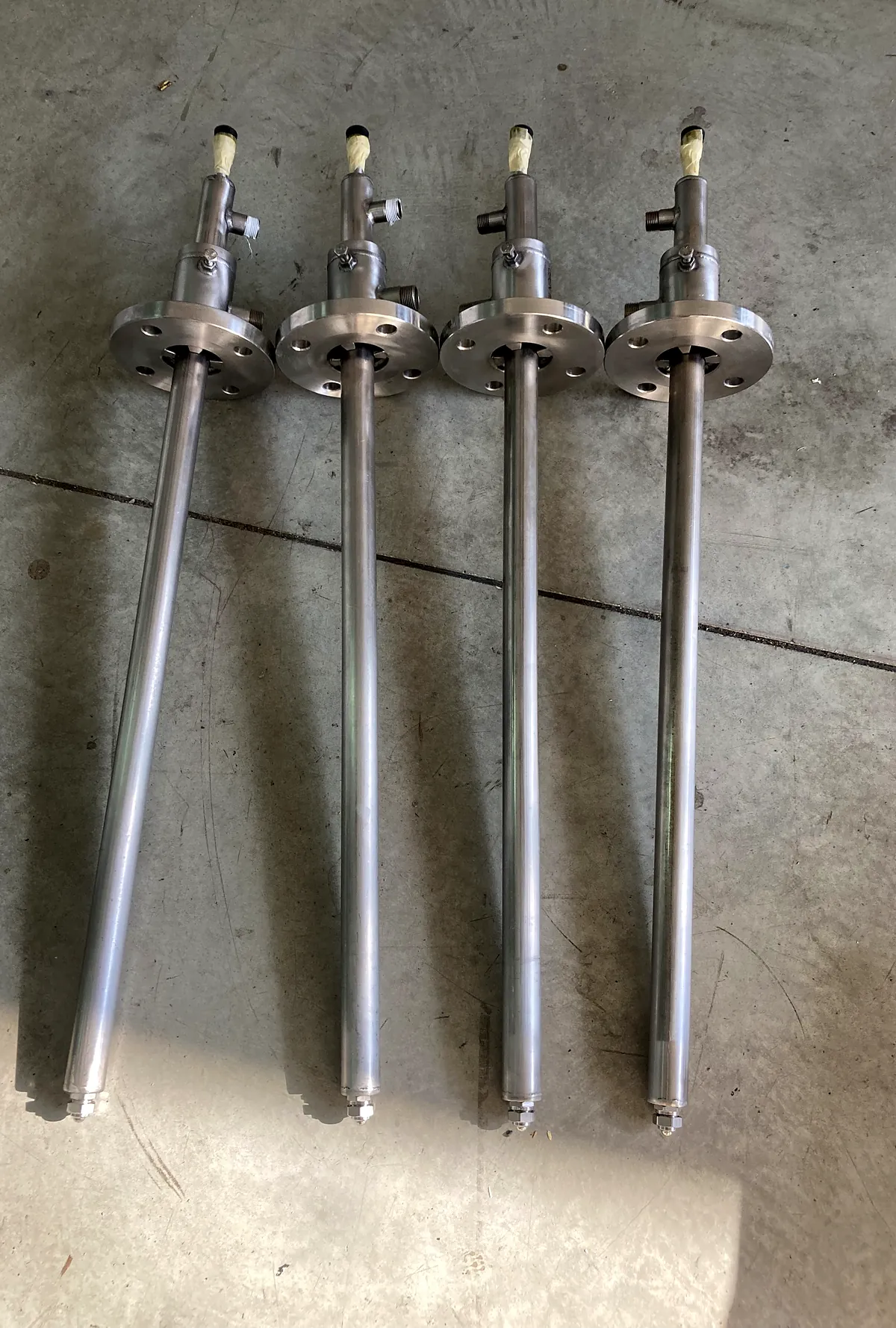
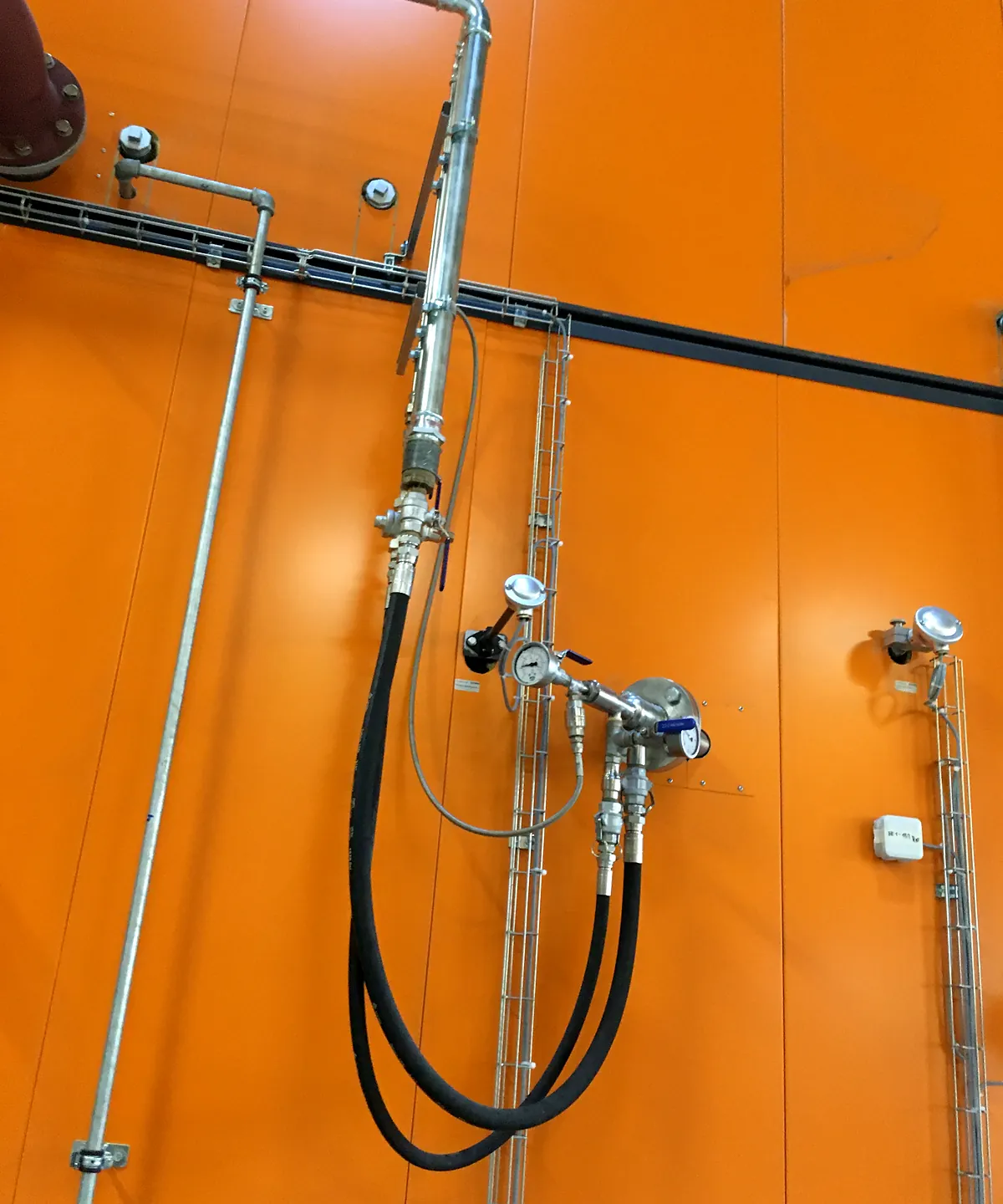
The reagent, an aqueous urea solution, is atomised into the post-combustion zone. At high temperature the urea decomposes and releases ammonia, which selectively reduces NOx to nitrogen and water vapour, without a catalyst.
Design parameters:
- Temperature window: 850–950 °C. Below it the reaction is incomplete and ammonia slip increases; above 1,000 °C ammonia oxidises and forms additional NOx.
- Residence time of the flue gas downstream of injection: at least 0.3 s, preferably over 1 s.
- Uniform reagent distribution: the urea must cover the whole cross-section crossed by the flue gas: this depends on the number and position of the lances and on compressed-air atomisation, which turns the reagent into fine droplets.
- Normalised stoichiometric ratio (NSR) between reagent and NOx to be reduced: controlled on the stack NOx signal.
Typical efficiency: 30–60%, up to 70% under favourable conditions. No catalyst, small footprint, suitable for retrofits. One example is our reference on a 2.5 MW biomass boiler in France.
SCR – Selective catalytic reduction
Reduction takes place over a catalyst based on vanadium and tungsten oxides on a titanium dioxide support, in honeycomb modules installed in a reactor. The catalyst lowers the reaction temperature to about 250–350 °C, depending on the formulation, with efficiencies of 90–95%.
The reactor is normally installed downstream of dust removal, to protect the catalyst from dust, heavy metals and compounds that deactivate it. Since flue gas downstream of a baghouse filter is around 150 °C, reheating with a burner or heat exchanger is usually required, which affects operating costs.
SNCR / SCR comparison
| Feature | SNCR | SCR |
|---|---|---|
| Catalyst | No | Yes |
| Reaction temperature | 850–950 °C | approx. 250–350 °C |
| Position | In the boiler, post-combustion zone | Downstream of dust removal |
| Typical NOx reduction | 30–60% | up to 90–95% |
| Investment | Modest | High |
| Operating costs | Low | High (catalyst, flue gas reheating) |
| Ammonia slip | Must be controlled | Must be controlled |
Costs and technology selection
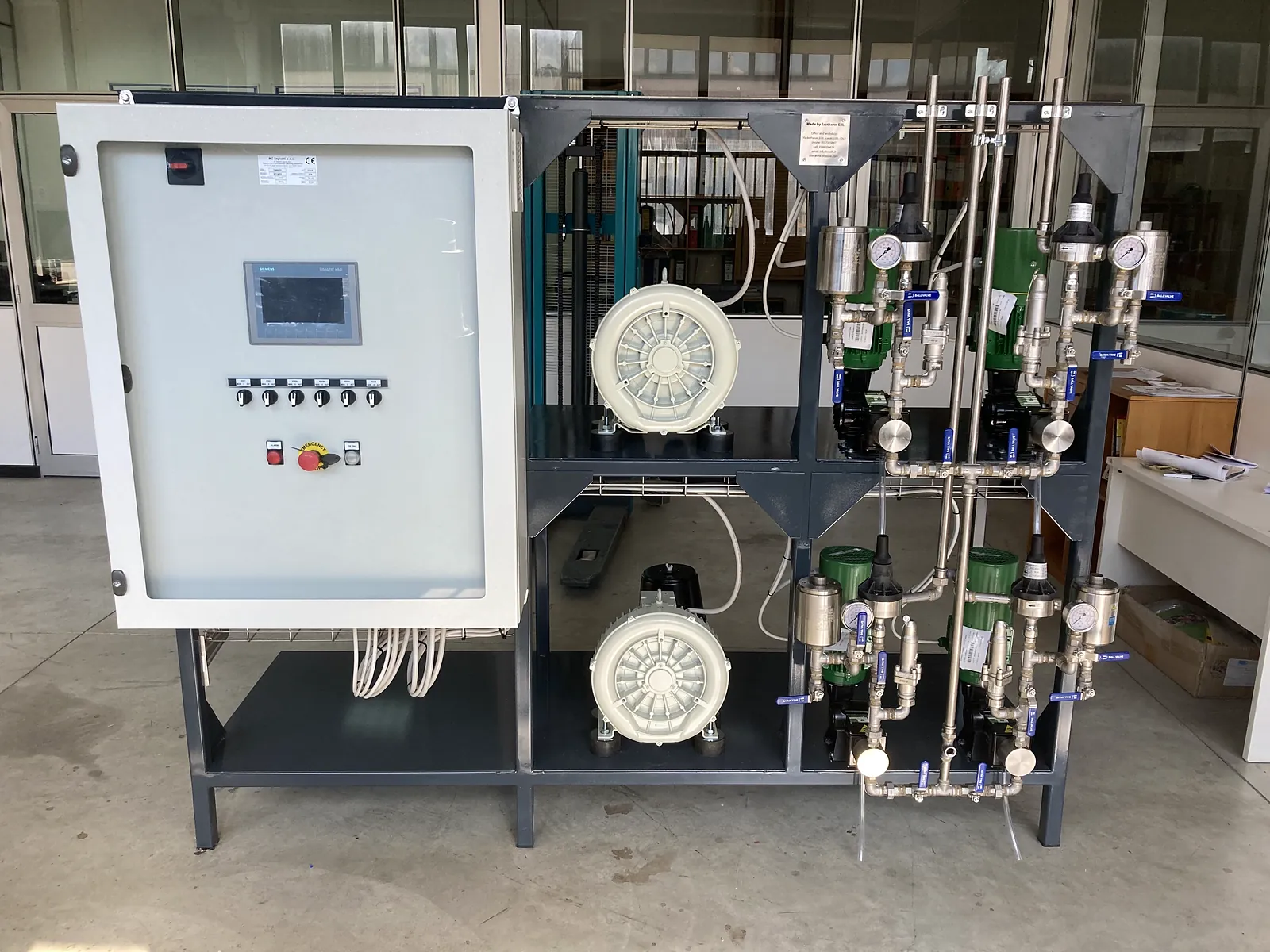
- SNCR: modest investment; operation limited to reagent consumption, atomising air and maintenance of lances and metering pumps.
- SCR: higher investment; operation burdened by flue gas reheating, pressure drop and periodic catalyst replacement or regeneration.
- Combined SNCR + SCR: SNCR performs primary abatement in the boiler, a smaller SCR completes the reduction.
The choice depends on the emission limit, the available temperature profile and the space on site: this is why every project starts with a site visit and an analysis of the process data.
Reagent: urea or ammonia
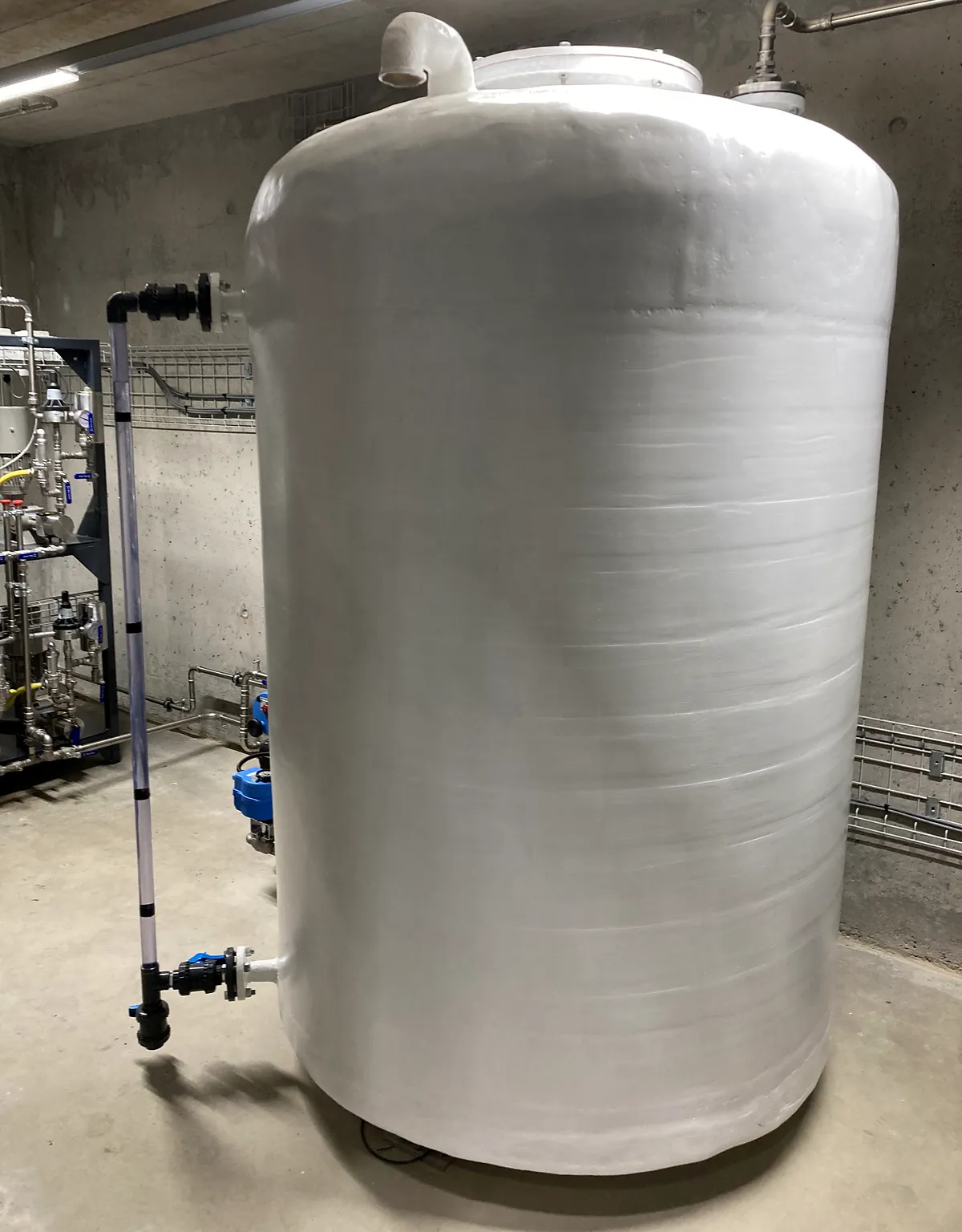
Both processes use ammonia as the reducing agent. Most plants dose an aqueous urea solution, which decomposes in the combustion chamber and releases ammonia. Compared with ammonia solution, urea is easier to handle, store and maintain, with comparable reduction efficiency.
The main limitation is crystallisation, which depends on concentration: the 32.5% solution crystallises at about −11 °C, more concentrated solutions at higher temperatures. Storage and lines must be protected from frost.
Agricultural urea
It must not be used. Its impurities, including biuret, reduce reaction efficiency and cause fouling in nozzles and piping; in SCR systems they can compromise the catalyst. High-purity technical urea compliant with ISO 22241 (AdBlue type) or reagents specifically intended for industrial DeNOx should be used.
Ammonia slip
Ammonia slip is the unreacted ammonia leaving the stack. It is partly structural in both systems:
- SNCR: increases with reagent overdosing and with injection temperatures that are too low;
- SCR: increases as the catalyst becomes exhausted and loses activity over time.
In the presence of SO₃, ammonia forms ammonium bisulphate, which deposits on heat exchangers and filters; many permits set a stack limit for it.
It is controlled through:
- automatic dosing control on the stack NOx signal, normalised to the reference O₂;
- injection enabled only within the reaction temperature window (SNCR);
- measurement of residual ammonia, where required, to limit dosing;
- periodic checks of catalyst activity and its replacement or regeneration (SCR).
Frequently asked questions
How much NOx reduction can SNCR achieve?
A well-designed SNCR system typically reduces NOx by 30–60%, up to 70% under favourable conditions. The result depends on the boiler temperature, flue gas residence time and lance positioning.
What is the difference between SNCR and SCR?
SNCR injects the reagent directly into the boiler at 850–950 °C, without a catalyst. SCR reacts ammonia with NOx over a catalyst at about 250–350 °C, downstream of dust removal: it achieves higher reductions but costs more to install and operate.
Can SNCR be installed on an existing boiler?
Yes. An SNCR system needs a few boiler openings for the lances, a compact dosing skid and reagent storage: it can be retrofitted to plants in operation with limited downtime.
What reagent does a DeNOx system use?
Almost always technical-grade urea in aqueous solution, which is easier to handle than ammonia. Agricultural urea must not be used, as its impurities damage the system.